Best Uganda Gorilla Trekking Course Tips
Discover the best Uganda gorilla trekking course, structured as a practical curriculum covering permits, sectors, fitness, packing, and the trek day itself. Explore Uganda safari packages and gorilla safari Uganda built around preparation rather than guesswork.
A successful Uganda gorilla trekking trip follows a sequence, and most travellers get that sequence wrong. They book a lodge first, then chase a permit, then discover their sector is four hours from their accommodation. This course corrects the order. It begins with the Uganda gorilla trekking permit, moves through sector selection and fitness preparation, and ends with the hour itself. Each module is short, practical, and drawn from what actually determines whether the trek feels controlled or chaotic.
Popular Uganda Safari Packages
Best Uganda Gorilla Trekking Course Tips
Module 1: The Permit Is the First Lesson on Uganda Gorilla Trekking
The Uganda gorilla trekking permit is the foundation of the entire course, and it must be secured before flights, lodges, or ground arrangements. Foreign non-residents pay, foreign residents, Rest of Africa visitors, and East African citizens, all issued by the Uganda Wildlife Authority. A 2026 change means you can no longer book a specific gorilla family, only a sector and date, so the permit locks you into one of Bwindi's four trekking areas. The permit includes park entry for trek day, ranger guides, and armed security, but excludes porter fees of around to and tips. Book three to six months ahead for dry-season dates, and confirm in writing that the permit will be issued in your passport name before any balance is paid.
Module 2: Choosing Your Bwindi Sector on Gorilla Safari Uganda
Sector selection is the second lesson, and it shapes terrain, trek length, and lodge access more than any other decision. Bwindi spans 321 square kilometres and is managed as four separate trekking sectors, each with its own habituated families and entrance gate. Buhoma in the north is the original sector, established in 1993, with the widest lodge range, the most reliable road access, and generally gentler terrain. Rushaga in the south holds the largest concentration of habituated families and the best permit availability for groups. Ruhija sits highest at around 2,350 metres and is accessed via Kabale, with four gorilla groups. Nkuringo in the southwest is the hardest, with steep descents and climbs, and suits fit trekkers chasing views. For a first Uganda gorilla trekking trip, Buhoma is the safest strategic default.
Module 3: The Habituation Experience as an Advanced Option on Uganda Gorilla Trekking
The Uganda gorilla trekking habituation experience is the advanced module, and it costs for foreign non-residents, rising to from January 2027, compared with the standard permit. It offers up to four hours with a semi-habituated family alongside researchers and trackers, and it is available only in Rushaga. The strategic question is whether you value time over cost. For travellers who have trekked once before and want a deeper encounter, habituation is the strongest upgrade in Uganda. For first-timers, the standard permit already delivers the full one-hour experience and leaves budget for a second trek or a chimpanzee permit in Kibale.
Module 4: Fitness Preparation for Uganda Gorilla Trekking
Fitness is the module most travellers underestimate. Bwindi ranges from roughly 1,160 to 2,607 metres, with exposed roots, wet clay, and gradients that make moderate distances take twice as long as on flat ground. Fitness preparation is worth taking seriously, and if your regular exercise does not include walking on uneven, inclined terrain with a loaded pack, introducing two to three weeks of hill walking will make a measurable difference. A realistic plan starts six to eight weeks before travel with brisk walking for 30 to 60 minutes most days, adding hill or stair training and leg strengthening. The practical benchmark is the ability to walk uphill for 45 to 60 minutes without stopping and carry a light backpack for several hours.
Module 5: Packing for Uganda Gorilla Trekking
Packing is the module where small decisions produce large consequences. Waterproof hiking boots with ankle support and deep tread, broken in before travel, are the single most important item, and trail runners are not enough for Bwindi's mud. Long gardening gloves protect your hands from stinging nettles, gaiters keep mud and ants out of your boots, and long trousers tucked into socks complete the protection. Carry at least 1.5 litres of water, a light rain jacket, and a daypack under 10 kilograms. Keep vapes, plastic bags, camouflage clothing, and drones at home, because all are restricted or banned in Uganda.
Module 6: Timing Your Uganda Gorilla Trekking for Trails and Value
Timing determines both conditions and cost. Bwindi experiences two main dry seasons, May to September and December to February, and two wet periods, March to April and October to November. The long dry season from May to September offers firm trails, fewer slippery sections, and generally easier trekking, ideal for first-time trekkers. The shorter dry season from December to February is cooler, with misty mornings and firm trails, providing excellent photographic conditions. The wetter months bring lower rates and fewer crowds but softer, sometimes slippery trails. For a budget Uganda safari, the green-season window is worth considering, provided you pack for mud.
Module 7: Trek Day Itself on Uganda Gorilla Trekking
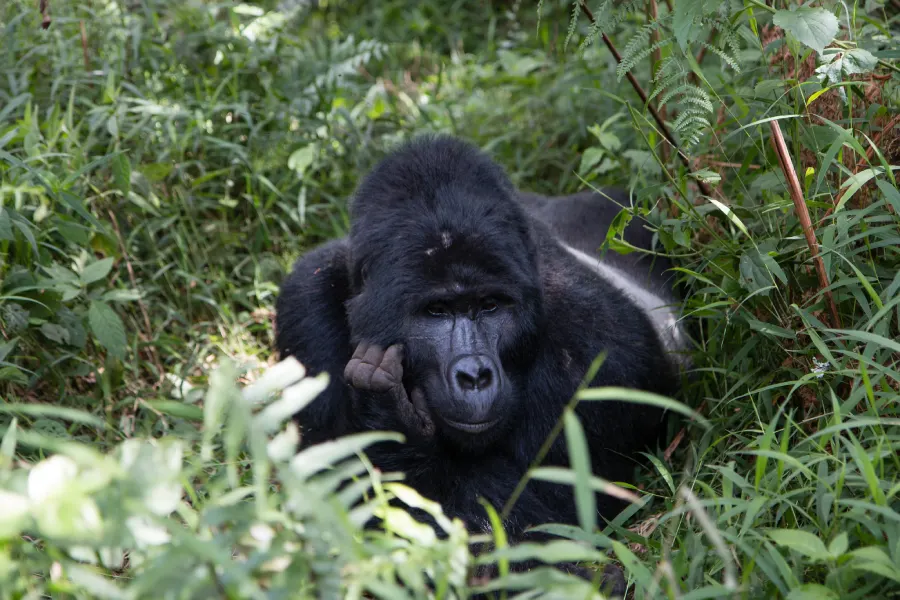
Trek day follows a fixed rhythm across all four sectors. Groups assemble at 8:30 AM for a formal ranger briefing, which covers the rules that carry real weight: maintain at least seven metres from the gorillas at all times, do not eat or drink in their presence, avoid sudden movements, and do not make sustained eye contact with the silverback. Rangers also confirm that no one is showing respiratory symptoms, because gorillas share roughly 98 percent of human DNA. After the briefing, the group sets out with armed rangers and experienced trackers who have gone ahead to locate the family. The trek lasts anywhere from one to six hours, followed by exactly one hour with the gorillas. Porters carry daypacks for roughly to and are worth hiring regardless of fitness.
Module 8: Lodges and Logistics on Uganda Gorilla Trekking
Lodge position matters more than star rating because trek mornings begin with a briefing you cannot miss. In Buhoma, properties sit minutes from the sector office, and the widest range of established lodges is available. When booking Uganda safari lodges, confirm in writing whether the property is genuinely near your sector headquarters, because a lodge in the wrong sector can add hours to trek morning. Access also varies sharply: Rushaga is roughly four to four and a half hours from Kigali via the Cyanika border, making it the natural choice for travellers flying into Rwanda and crossing into Uganda, while Buhoma is eight to nine hours from Entebbe by road.
Module 9: Confirming Everything Before You Pay on Uganda Gorilla Trekking
The final module is verification, and it protects your money. Ask whether the permit is included and issued in your passport name, with written UWA confirmation forwarded before the balance is paid. Ask whether the vehicle is private or shared, which lodge and room category are confirmed, and whether park fees are bundled. Request a line-by-line breakdown covering permit, lodging, transport, meals, and gratuities rather than a single total. For Uganda safari tours, any operator unwilling to provide all of this in writing should not receive your money.
Best Time to Visit for Uganda Gorilla Trekking Course
Determining the best time for Uganda safari trekking means balancing trail conditions with permit availability and price. The long dry season from May to September and the short dry season from December to February deliver firmer trails and easier hiking. The Uganda dry season safari window is also when permits sell out fastest, often three to six months ahead. The wetter months bring lower rates at Uganda safari lodges and fewer crowds, but trails can be steep and slick and the trek takes longer.
Why Book with Eton Safaris for Uganda Gorilla Trekking
Why Book with Eton Safaris? Because a Uganda gorilla trekking course only works if the permit, sector, lodge, and airport are matched before you travel, and that coordination cannot be improvised on arrival. Eton Safaris designs bespoke journeys beyond the standard Uganda safari template, securing permits in your name, matching you to the sector that suits your fitness, and confirming every inclusion in writing. Whether you seek a luxury Uganda safari, a budget Uganda safari, or a family Uganda safari, they tailor each Uganda safari itinerary with transparent costs and candid advice on which module matters most for your dates.